
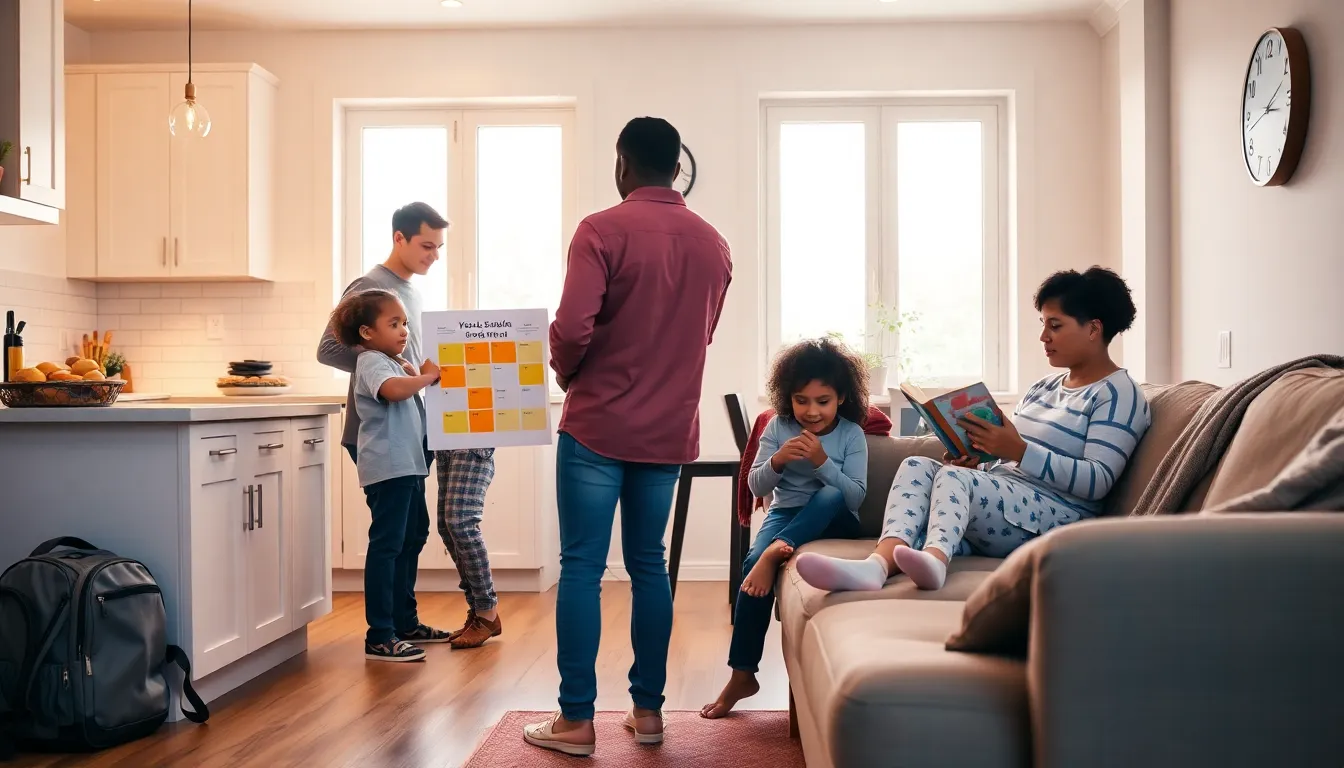
A solid family routines guide can transform chaotic mornings and stressful evenings into predictable, peaceful rhythms. Families with consistent routines report less stress, better sleep, and stronger connections. Kids thrive on predictability, they feel safer when they know what comes next. Adults benefit too: routines reduce decision fatigue and free up mental energy for things that actually matter.
This guide breaks down why family routines work, which daily routines make the biggest impact, and how to build habits that last through every stage of family life.
Table of Contents
ToggleKey Takeaways
- A solid family routines guide reduces stress, improves sleep, and strengthens connections by creating predictable daily rhythms.
- Focus on morning and evening routines first—these transitions have the biggest impact on your family’s overall mood and energy.
- Prepare the night before by laying out clothes, packing lunches, and setting out backpacks to make mornings calmer.
- Start small by implementing one routine at a time and sticking with it for two to three weeks before adding more.
- Involve kids in creating routines to increase buy-in and make them more willing to follow through.
- Adapt your family routines as children grow—what works for toddlers will need to evolve for school-age kids and teenagers.
Why Family Routines Matter
Family routines do more than keep households organized. Research from the American Academy of Pediatrics shows that children with consistent routines develop better emotional regulation and social skills. They perform better academically and show fewer behavioral problems.
Routines create a sense of security. When a child knows that dinner happens at 6 PM and bath time follows at 7 PM, their world feels stable. This predictability reduces anxiety, especially for younger children who can’t yet tell time or understand abstract schedules.
For parents, family routines eliminate hundreds of small daily decisions. Should we brush teeth before or after breakfast? When does assignments happen? These questions disappear once routines take hold. The mental load lightens.
Family routines also strengthen relationships. Shared rituals, whether it’s Sunday pancakes or Friday movie nights, create memories and traditions. They give family members something to look forward to and talk about together.
The benefits compound over time. A family routines guide isn’t about rigid scheduling. It’s about building a framework that supports everyone’s well-being while leaving room for spontaneity and fun.
Essential Daily Routines to Establish
Some routines matter more than others. Focus energy on the transitions that cause the most friction: mornings and evenings. These two windows set the tone for everything else.
Morning Routines
Morning routines determine how the entire day unfolds. A rushed, chaotic morning leaves everyone frazzled before 9 AM. A calm morning routine gives family members a strong start.
Effective morning routines share common elements:
- Wake-up time: Set consistent wake times, even on weekends (within 30 minutes of weekday times).
- Sequence of tasks: Establish a fixed order, wake up, use bathroom, get dressed, eat breakfast, brush teeth, grab backpack.
- Visual cues: Younger children benefit from picture charts showing each step.
- Prep the night before: Lay out clothes, pack lunches, and set out backpacks to reduce morning decisions.
A good family routines guide emphasizes preparation. The most successful morning routines actually start the evening before.
Evening and Bedtime Routines
Evening routines help children (and adults) wind down after busy days. The goal is to shift from active energy to calm, sleep-ready states.
Start the wind-down process 30-60 minutes before target bedtime. This might include:
- Turning off screens
- Taking a warm bath
- Putting on pajamas
- Reading together
- Brief conversation about the day
- Lights out at the same time each night
Consistency matters here. The body’s internal clock responds to regular sleep schedules. Children who go to bed at the same time each night fall asleep faster and sleep more soundly.
Evening routines also provide natural opportunities for connection. Reading together or talking about the day creates space for bonding that busy daytime hours often lack.
Tips for Creating Routines That Stick
Knowing which routines matter is one thing. Making them stick is another. Many families start strong but abandon new routines within weeks. Here’s how to build family routines that last.
Start small. Don’t overhaul everything at once. Pick one routine, maybe just the bedtime routine, and focus there for two to three weeks before adding more. Trying to carry out a complete family routines guide overnight usually backfires.
Involve everyone. Kids follow routines more willingly when they help create them. Ask for input on the order of tasks or which bedtime book to read. Ownership increases buy-in.
Be specific. “Get ready for school” is vague. “Brush teeth, make bed, get dressed, eat breakfast” is clear. Specific steps remove confusion and arguments about what “ready” means.
Use timers and visual aids. Young children respond well to sand timers or visual schedules. Older kids might prefer phone alarms or checklists they can mark off.
Expect resistance. New routines feel uncomfortable at first. Children may push back, this is normal. Stay consistent for at least three weeks before evaluating whether a routine works.
Build in flexibility. Rigid routines break under pressure. The best family routines guide accounts for sick days, holidays, and unexpected events. Have a “short version” of routines for busy days.
Celebrate wins. Notice when routines work. A simple “We got out the door on time today.” reinforces the behavior you want to see.
Adapting Routines as Your Family Grows
Family routines aren’t set-and-forget. What works for a family with toddlers looks different from what works for a family with teenagers. Routines must evolve.
Babies and toddlers need simple, predictable routines with lots of repetition. Focus on sleep, feeding, and play schedules. Keep expectations realistic, flexibility is essential at this stage.
Preschoolers can handle more structured routines. They love responsibility, so give them small jobs within the routine: putting dirty clothes in the hamper, setting out their shoes.
School-age children need routines that account for assignments, activities, and social commitments. This is when a family routines guide really pays off, structure keeps everyone on track as schedules get busier.
Teenagers need routines too, but they also need autonomy. Shift from directing routines to coaching them. Discuss why certain routines matter (like consistent sleep schedules) and let them take ownership of implementation.
Adding a new baby disrupts everything. Expect to simplify routines temporarily. Keep the most important ones, like bedtime for older siblings, and let others slide until life stabilizes.
Life transitions (new schools, moves, divorces, job changes) are good times to reassess family routines. Some old routines won’t fit new circumstances. Others become even more important as anchors during change.
The goal isn’t perfect consistency. It’s having enough structure that family life feels manageable, with room to adapt when needed.